


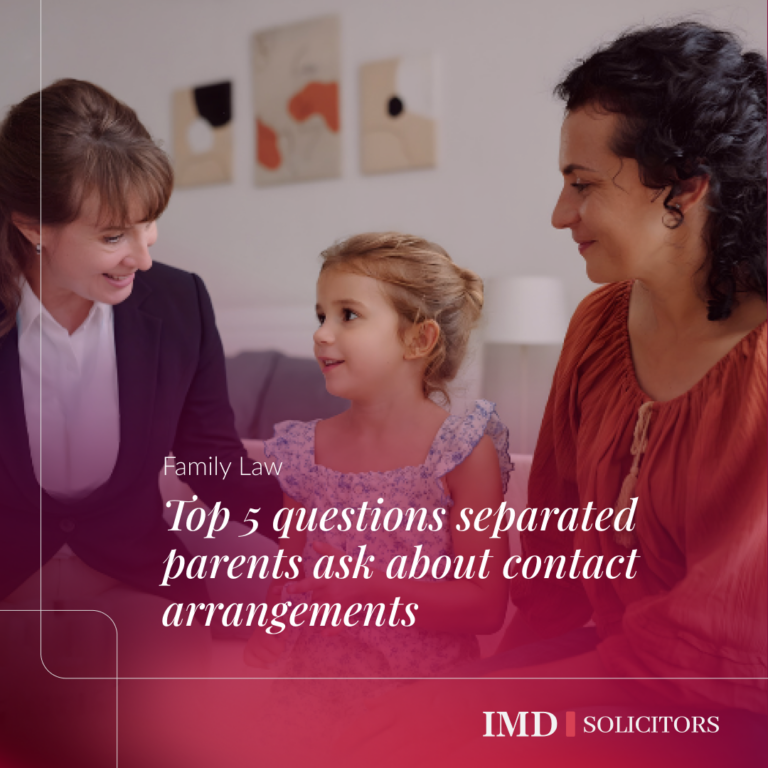

When parents separate, one of the most challenging aspects to navigate is the arrangements for contact with their child. Decisions regarding where the child will live, how much time they will spend with each parent, and how to handle significant life decisions for the child are fraught with emotional complexity and legal implications. In these circumstances, it is vital to seek professional legal advice before finalising any arrangements. Below, we explore the top five questions separated parents typically have about contact arrangements and why seeking specialist advice is essential.
1. How is contact usually arranged?
A common question that arises from separated parents is how a typical contact schedule looks and whether it can be flexible. The answer is far from straightforward and depends heavily on the circumstances surrounding the case. For instance, the age of the child, the school they attend, and the work schedules of each parent will all impact the contact arrangement. Ultimately, the primary concern is the welfare of the child, which should always remain the central focus of any decision-making process.
In some cases, parents may arrange contact by mutual agreement, often with the assistance of a mediator or solicitor. However, this arrangement may need to be formalised through a court order if either party does not adhere to the agreement. The flexibility of the contact arrangement will also depend on how well both parents communicate and their willingness to work together in the best interests of the child.
2. What can be done if the other parent does not cooperate?
Another common concern from separated parents is the possibility of the other parent not cooperating with the agreed contact schedule. This situation can lead to disruption of the child’s routine and emotional distress for both the child and the parents. Parents often ask about their options when dealing with a parent who refuses or disrupts contact.
In these cases, there are both out-of-court and court-based options to ensure contact arrangements are adhered to. Alternative dispute resolution (ADR), such as mediation, can be an effective means of resolving conflicts without the need for court intervention. If ADR fails, the family court can become involved, with orders being made to enforce contact and ensure compliance.
3. Is it necessary to go to court, or can we reach an agreement outside of court?
Many parents are unsure whether they must go to court to formalise contact arrangements. Some are eager for the court to make a decision, while others are apprehensive about the emotional and financial costs associated with litigation. It is not mandatory for separated parents to go to court, as many parents are able to reach an agreement through negotiation or mediation. However, if an agreement cannot be reached, or if there is a concern that one parent will not comply with the arrangements, then family court may become necessary.
Seeking legal advice is crucial here, as a family solicitor can help guide parents through the various dispute resolution options available.
4. How should holidays, travel, and long-distance arrangements be handled?
Arranging contact during holidays or when parents live in different countries adds layers of complexity to child arrangements. Travel arrangements, the cost of travel, and the length of time spent with each parent need to be clearly defined.
Parents should consider not only the logistics of these arrangements but also the emotional impact on the child. Travel can be an exciting opportunity for the child but may also lead to feelings of anxiety, especially when the child is separated from their primary caregiver for an extended period.
A solicitor specialising in family law can advise on the best way to approach these issues and ensure that any decisions made are in the child’s best interest. This may include drafting a legally binding agreement to address any concerns or uncertainties regarding long-distance arrangements.
5. What are my legal rights and responsibilities towards my child?
Understanding legal rights and responsibilities is one of the most frequent requests by parents following separation. Parents often seek clarity on their rights if the other parent is being unreasonable or obstructing contact, or conversely, they may be concerned about their role as the primary carer and whether they have exclusive rights over significant decisions for the child.
In these situations, a solicitor can explain the legal framework governing child contact and parental responsibility. Disagreements may arise over specific decisions, such as where the child should go to school or medical treatment decisions.
Legal advice is essential to clarify the boundaries of parental responsibility and to ensure that decisions are made within the law. If one parent is obstructing contact or acting in a way that is detrimental to the child, legal remedies may be available to resolve the situation.
The Importance of Specialist Legal Advice
Arranging contact following a separation is frequently the area in family law that gives rise to the most challenges. The questions parents face touch on deeply personal issues, and the decisions made have consequences for both the parents and the child. While the desire to avoid conflict or court intervention is understandable, it is crucial to understand that taking the wrong approach can lead to unnecessary emotional and financial strain.
Legal advice from a family solicitor is essential to ensuring that both parents understand their rights and responsibilities and that the child’s welfare remains the primary concern. It is not only about resolving disputes but also about ensuring that the child’s best interests are protected throughout the process.
At IMD Solicitors LLP, we provide guidance to parents facing these difficult decisions. Our family law specialists have years of experience helping clients navigate the complexities of contact arrangements. If you are facing separation and need assistance with contact arrangements, we recommend seeking legal advice as early as possible to avoid costly mistakes and to ensure that the child’s best interests are upheld.
Conclusion
Making arrangements for child contact after separation can be a challenging aspect of family life. From flexible contact schedules to addressing non-cooperation, handling long-distance arrangements, and understanding parental rights, there are many legal and practical considerations to navigate. By seeking professional advice from a specialist family solicitor, parents can ensure that they make the best possible decisions for their child’s welfare, avoiding emotional and financial strain in the process.
This article is for general information only and does not constitute legal or professional advice. Please note that the law may have changed since this article was published.
